
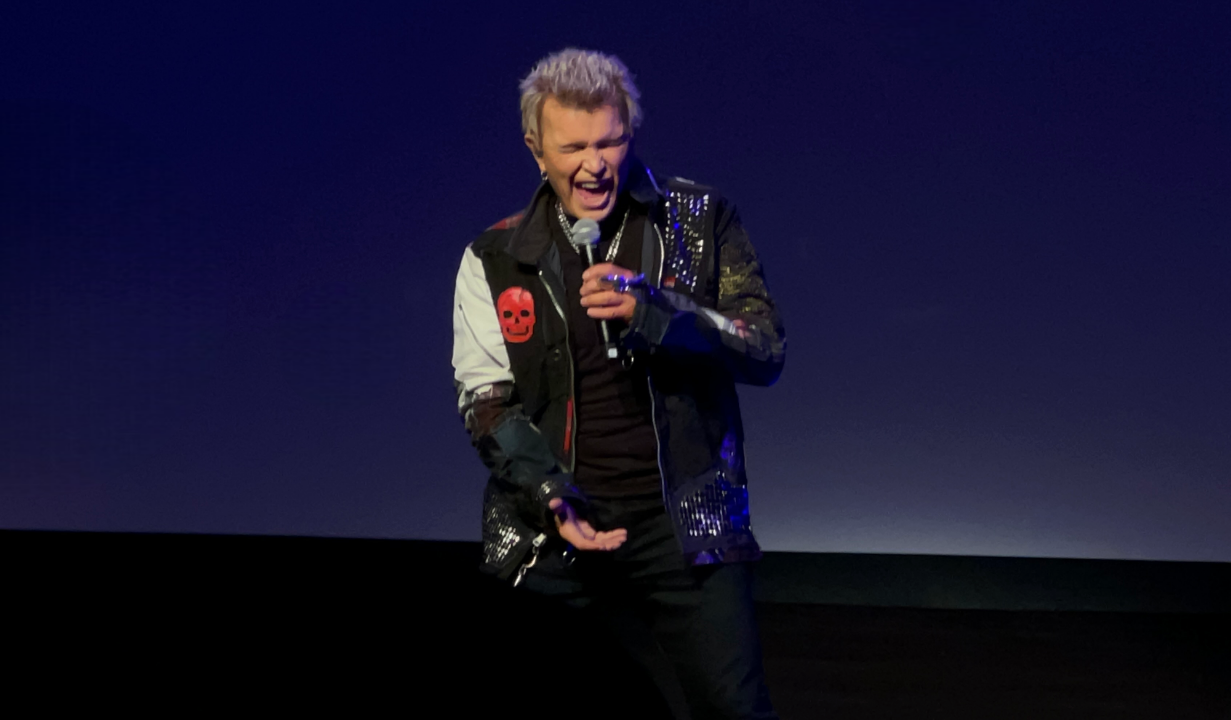
captured by Adam Sullivan
Punk rock legend Billy Idol and Swedish filmmaker Jonas Åkerlund took the stage at Tribeca Film Festival for the premiere of their new feature-length documentary, Billy Idol Should Be Dead. The name, which at first comes off as quite shocking, perfectly sets the tone for the film’s nearly-2-hour runtime. Within the first few stories and fragmented recollections of his past, Idol’s continued existence feels like a miracle in itself.
Told through a series of intimate reflections alongside candid interviews from friends, Billy Idol Should Be Dead tells the story of a musician who truly lived on the edge. Punk icon Billie Joe Armstrong of Green Day reflected on Idol’s genre-defining influence, while modern stars such as Miley Cyrus confess they likely would’ve had a crush on Billy Idol had they lived through his prime. Yet beneath the charisma & hardened exterior shown in interviews, Idol’s rise to fame came at the personal cost of his own well-being. An icon well on his way to superstardom in the 1980’s, Billy Idol found himself under the influence of far more than just adrenaline.

Åkerlund’s direction doesn’t shy away from the darkest chapters of the punk-rock pioneer’s life. The film captures Idol’s darkest moments, self-destructing under the crushing weight of fame. Countless nights blurred together in hotel rooms filled with alcohol, self-medication and several near-death experiences that almost seemed inevitable. As a young rebel suddenly granted the freedom to tour the world with no limitations, Idol found himself spiraling out of control. Billy Idol Should Be Dead brings these hazy memories to life through neon-lit animated sequences, mirroring the chaos and disorientation the singer lived. These sequences stand out as some of the film’s most powerful, refusing to glamorize the destruction Idol caused towards himself. Billy Idol was pushing fame, and himself, to their most extreme limits, even if it meant dying for it. Yet, from the outside looking in, fans anticipated the singer’s next major hit.

Beyond the internal chaos, Billy Idol Should Be Dead also shows the creative vision that elevated the punk singer to icon status. Billy Idol’s fascination with film helped in shaping his career from the very beginning. At the dawn of a new era in music media with the launch of MTV, Idol recognized the power in visual storytelling. Collaborating with leading directors such as Tobe Hooper, the horror visionary behind 1974’s The Texas Chainsaw Massacre, Idol developed the music video for “Dancing With Myself.” The endless rotation on MTV established Idol as a household name, and one of the defining faces of the decade.
As the 1990’s arrived, the cultural tide began to shift. Once the face of the punk rock movement, Billy Idol found himself searching for reinvention. The singer explored new opportunities, landing some small acting roles in Hollywood films and even earning himself a screen test for Terminator 2: Judgment Day, where director James Cameron envisioned him as the menacing T-1000. However, the extreme high-and-low moments of Idol’s career continued as this opportunity vanished before his eyes. Idol found himself sidelined after a devastating motorcycle accident left him with severe injuries to the point where he was unable to take on such a physically demanding role. When it came to Idol’s musical success as well, his popularity had begun to fade. His first album release since the accident, Cyberpunk, was met with harsh criticism from fans and critics alike. For the first time in his career, Idol’s future seemed uncertain in a world where his rebellion was no longer enough to define him.
Idol’s story may serve as a cautionary tale, but it also stands as a testament to his extreme resilience. After decades of self-destructive behavior and nearing collapse, redemption always remains within reach. Billy Idol Should Be Dead brings the story of the rocker full-circle, revealing an artist who has learned how to make peace with his past and grow from it. Today, Idol embraces life as a family-man, which is a far cry from the wild singer who once defined a pivotal era in music history. In one of the film’s most surprising revelations, Idol discovers he has another son, along with grandchildren, from an encounter during his touring years. Billy Idol makes the decision to meet them for the first time as part of the film. His son, meeting a father he had only known through screens, now faces reality alongside the icon. This moment serves as a metaphorical sigh of relief after years of chaos and uncertainty within the singer’s personal journey. Billy Idol Should Be Dead serves as an inspiring reminder that even after a lifetime spent living on the edge, Billy Idol found peace in this world on his own terms.
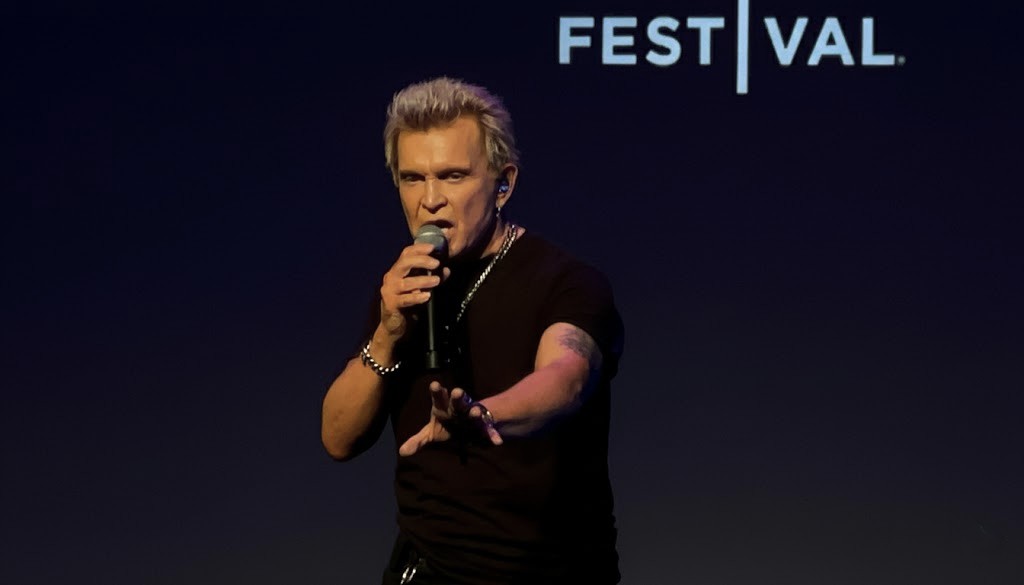
Billy Idol Should Be Dead Live Performance,
captured by Adam Sullivan
Following the screening, Billy Idol and longtime collaborator Steve Stevens returned to the spotlight for a special acoustic performance of the singer’s most iconic hits. For an artist so accustomed to bright lights and roaring crowds, this moment felt quite vulnerable and fulfilling. The performance served as a fitting conclusion to the transformative journey the audience had just witnessed on-screen. In a celebration of his career and achievements, Idol performed “Dancing With Myself,” “White Wedding,” “Eyes Without a Face,” “People I Love,” and “Rebel Yell.”
As the title suggests, by all accounts, Billy Idol should be dead. But in the face of all adversities and expectations, the punk rocker outlived the chaos that once defined his legacy. For a musician who’s fate once seemed to be destined to end in a headline, Idol now lives in his truest form, focused on the ones who mean the most to him. His greatest act of rebellion wasn’t against the system or against the fame that once consumed him, but against his former self. In the end, Billy Idol learned to evolve, grow and to cement his legacy as the man who made it out alive against all odds.
 NYCityGuys